

What we talked about
20 years of Ruby on Rails: from a room of 40 to Shopify and GitHub
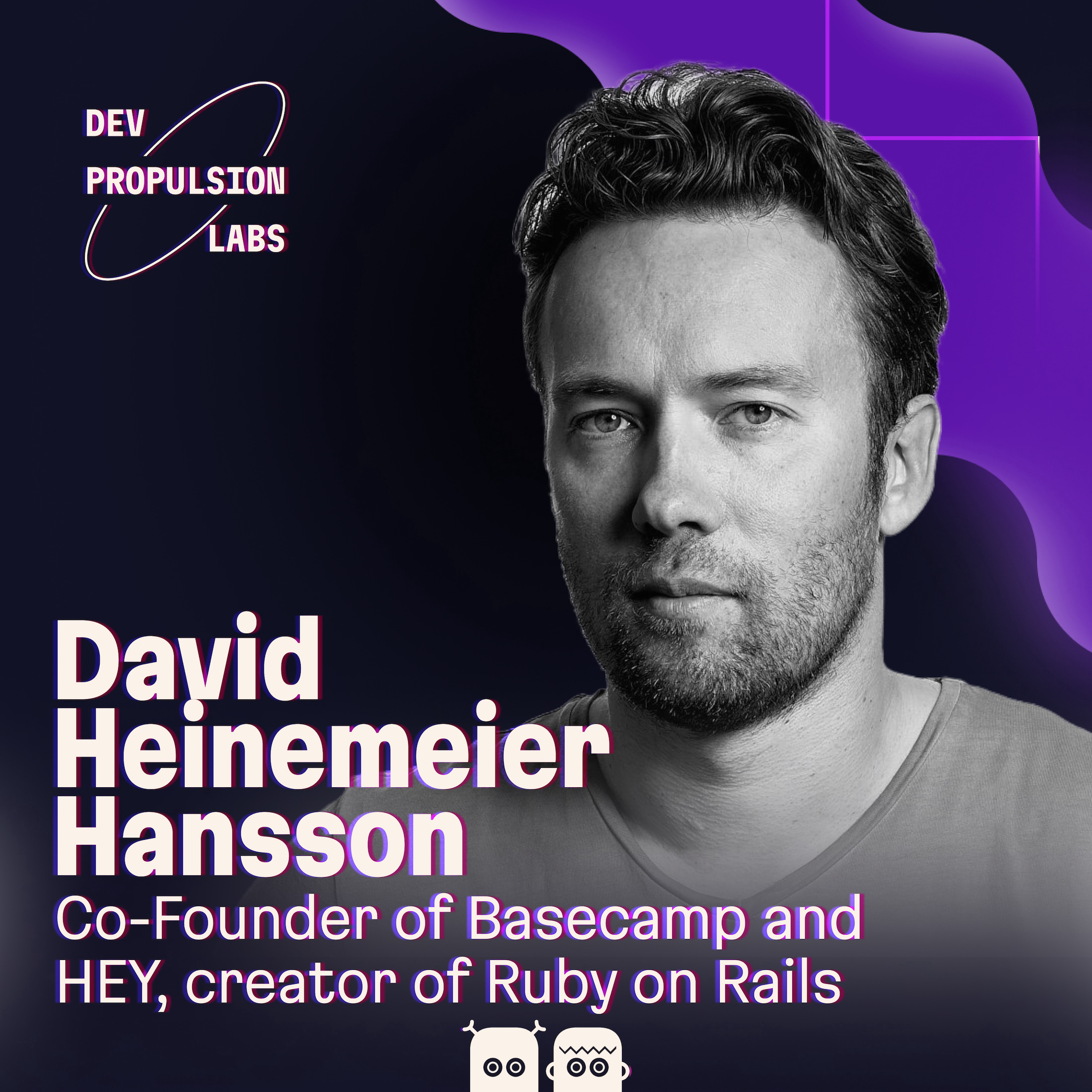
DHH discovered Ruby in 2003 and it changed how he saw programming. Rails was extracted from Basecamp, the first app ever built with it. Within a year of Rails’ release, the inflection point hit. Shopify started on Rails around 2005, GitHub a couple years later, then Twitter and Airbnb. If Basecamp hadn’t been a commercial success, DHH says he might not have been able to invest in Rails for two decades. Open source and business funded each other.
Renaissance developers: one person, one framework, full product
At Rails World 2023, DHH introduced the idea of the Renaissance developer. Rails 7 was the turning point: with Hotwire, Stimulus, Turbo, and import maps all in the default box, a single developer can build a complete application without learning JavaScript build pipelines or front-end frameworks. DHH says the idea that you need a team of 20 just to get started is nonsense. Rails was built so that one person with the right tools can build everything.
Changing your mind is the point
DHH says the most enjoyable part of getting older is the capacity to revisit your priors. He wrote a blog post called “I love being wrong” because being proven wrong is a growth opportunity. He used to be evangelical about Ruby, trying to convert people by force of argument. Now he speaks to people who already have a splinter in their mind, wondering why things are so hard. His approach shifted from “you should use Rails” to “have a look at what we’re doing over here.”
The TypeScript experiment
After spending three weeks deep in Swift and SwiftUI for iOS, DHH started to appreciate static typing. Then he tried building web tooling in Swift and hit the wall of generic programming. He rewrote the same thing in Ruby and all the pain went away. His conclusion: statically typed languages have advantages for some people in some circumstances, but building tools is not one of them.
The counter-melody to overwork culture
DHH and Jason Fried have long argued against the American obsession with overwork. But DHH admits they may have over-indexed on calm. He now accepts that some stretch is good, that some domains need people who are a little bit crazy, and that unpredictability and challenge are part of what makes life interesting. He still builds project management tools and email systems, not rockets, and he’s honest about the difference.
Shipping and hearing a four-year-old laugh
When asked what makes him feel great about his work, DHH says shipping. Getting something out there and seeing the reaction from reality. On the personal side, he says hearing a four-year-old laugh beats every material accomplishment. He 10x’d that feeling when it was his own kid. That continuation of our species gives great purpose and meaning to life on a daily basis.